BLUE NOTE RECORDS:
85 ANNI
DI SUONO CHE NON INVECCHIA
BLUE NOTE RECORDS:
85 YEARS
OF SOUND THAT NEVER AGES
Gennaio 1939. Alfred Lion ha ventisette anni, è arrivato a New York da Berlino due anni prima, e ha in tasca sette dollari — esattamente quanti ne servono per prenotare uno studio di registrazione per un pomeriggio. Quello che registra quella mattina con il pianista boogie-woogie Meade Lux Lewis non è un capolavoro: è un documento. Due pezzi, qualche centinaio di copie pressate, nessuna distribuzione. Ma è l'atto di fondazione di un'etichetta che nei decenni successivi cambierà il suono del jazz.
January 1939. Alfred Lion is twenty-seven years old, arrived in New York from Berlin two years earlier, and has seven dollars in his pocket — exactly enough to book a recording studio for an afternoon. What he records that morning with boogie-woogie pianist Meade Lux Lewis is not a masterpiece: it is a document. Two pieces, a few hundred pressed copies, no distribution. But it is the founding act of a label that over the following decades would change the sound of jazz.
Blue Note Records nasce dalla convinzione di due uomini — Lion e l'amico Frank Wolff, che si unirà all'etichetta poco dopo — che il jazz meriti la stessa serietà con cui l'Europa tratta la musica classica. Lion e Wolff pensano che il jazz sia arte, e vada trattato come tale. Questa convinzione si traduce in scelte concrete che ancora oggi definiscono il suono dell'etichetta.
Blue Note Records is born from the conviction of two men — Lion and his friend Frank Wolff, who would join the label shortly after — that jazz deserves the same seriousness with which Europe treats classical music. Lion and Wolff believe jazz is art, and must be treated as such. This conviction translates into concrete choices that still define the label's sound today.
La stanza di Van Gelder
The Van Gelder Room
Rudy Van Gelder è un optometrista del New Jersey che registra musica nel salotto di casa dei suoi genitori a Hackensack. A partire dagli anni Cinquanta, diventa l'ingegnere del suono di quasi tutti i dischi fondamentali di Blue Note. Van Gelder sviluppa una tecnica di ripresa che mette i microfoni vicini agli strumenti, cattura la stanza, lascia respirare il suono. Il risultato è qualcosa che l'audiofilia moderna continua a cercare: una presenza fisica degli strumenti che non ha nulla di artificiale, come se musicisti e ascoltatore condividessero lo stesso spazio.
Rudy Van Gelder is an optometrist from New Jersey who records music in his parents' living room in Hackensack. From the 1950s onward, he becomes the sound engineer for nearly every foundational Blue Note record. Van Gelder develops a close-miking technique that places microphones near instruments, captures the room, lets the sound breathe. The result is something that modern audiophile culture continues to chase: a physical presence of instruments that has nothing artificial about it, as if musicians and listener share the same space.
I pressing originali Van Gelder — identificabili dall'iscrizione "VAN GELDER" incisa a mano nel runout — sono oggi tra i dischi più ricercati dal mercato collezionistico mondiale.
Original Van Gelder pressings — identifiable by the "VAN GELDER" inscription hand-etched into the runout groove — are today among the most sought-after records on the collector's market worldwide.
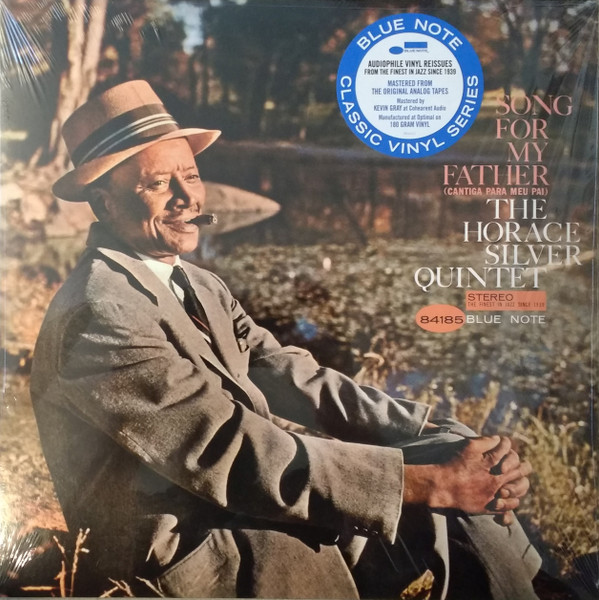
Un Song for My Father di Horace Silver (BLP 4185) Near Mint può superare i €200 su Discogs. A Near Mint copy of Horace Silver's Song for My Father (BLP 4185) can exceed €200 on Discogs.I pressing originali Van Gelder non sono collezionati solo per il loro valore storico. Sono collezionati perché suonano in modo che le ristampe, per tutta la loro cura, non riescono ancora a replicare completamente. La definizione dei bassi su un A Love Supreme originale, la presenza dei medi su un Maiden Voyage first pressing — sono qualità che si sentono fisicamente.
Original Van Gelder pressings are not collected only for their historical value. They are collected because they sound in ways that reissues, for all their care, have not yet fully replicated. The bass definition on an original A Love Supreme, the midrange presence on a Maiden Voyage first pressing — these are qualities felt physically, not merely described in words.
Le copertine che hanno cambiato il design
The covers that changed design
Se il suono di Blue Note è Van Gelder, le immagini sono Frank Wolff. Per trent'anni, fino alla sua morte nel 1971, Wolff fotografa ogni sessione con l'occhio di un artista. Le sue fotografie in bianco e nero di Miles Davis, Thelonious Monk, Lee Morgan costruiscono un'iconografia che ancora oggi definisce l'estetica del jazz.
If Van Gelder is the sound of Blue Note, the images belong to Frank Wolff. For thirty years, until his death in 1971, Wolff photographs every session with the eye of an artist. His black-and-white photographs of Miles Davis, Thelonious Monk, Lee Morgan construct an iconography that still defines the aesthetic of jazz.
Il grafico Reid Miles — che firma quasi 500 copertine Blue Note tra il 1956 e il 1967 — trasforma quelle fotografie in oggetti di design radicale. Tipografia a spaziatura larga, colori piatti, composizioni asimmetriche. Una copertina Blue Note degli anni Sessanta è riconoscibile a tre metri di distanza: non perché sia decorativa, ma perché ha una logica interna così coerente da diventare quasi un linguaggio.
Graphic designer Reid Miles — who signs nearly 500 Blue Note covers between 1956 and 1967 — transforms those photographs into objects of radical design. Wide-spaced typography, flat colours, asymmetric compositions. A Blue Note cover from the 1960s is recognisable from three metres away: not because it is decorative, but because it has an internal logic so coherent it becomes almost a language.
I dischi da avere in collezione
The records to own in your collection
Non esiste una lista univoca — Blue Note ha pubblicato oltre mille album in sessant'anni — ma esistono alcuni titoli che ogni collezionista di jazz prima o poi incontra.
There is no single definitive list — Blue Note has published over a thousand albums in sixty years — but certain titles every jazz collector eventually encounters.
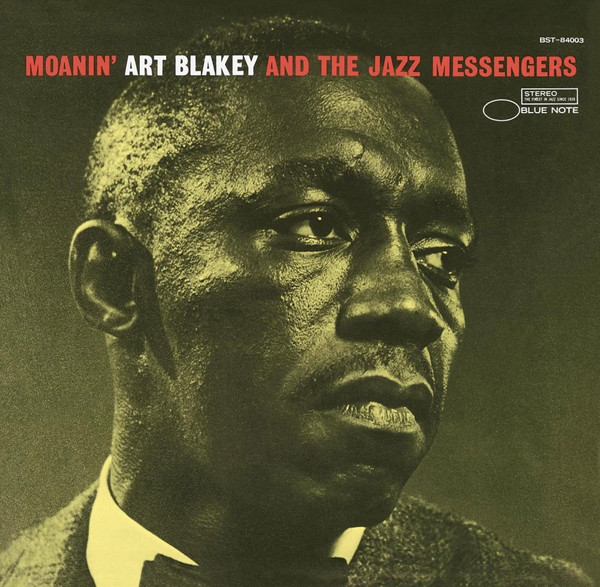
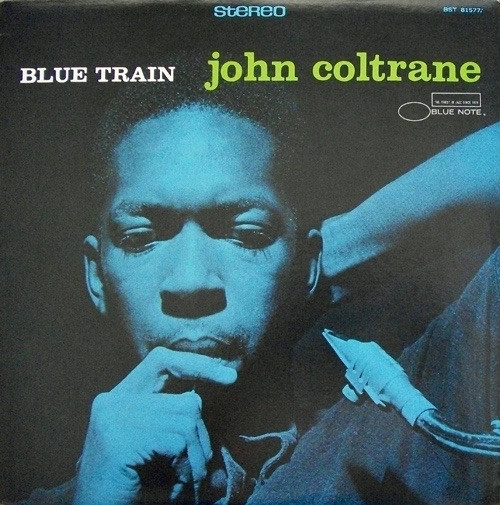
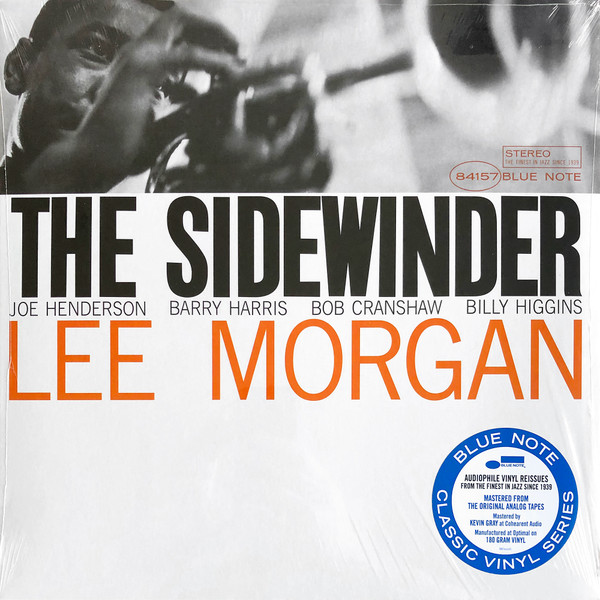
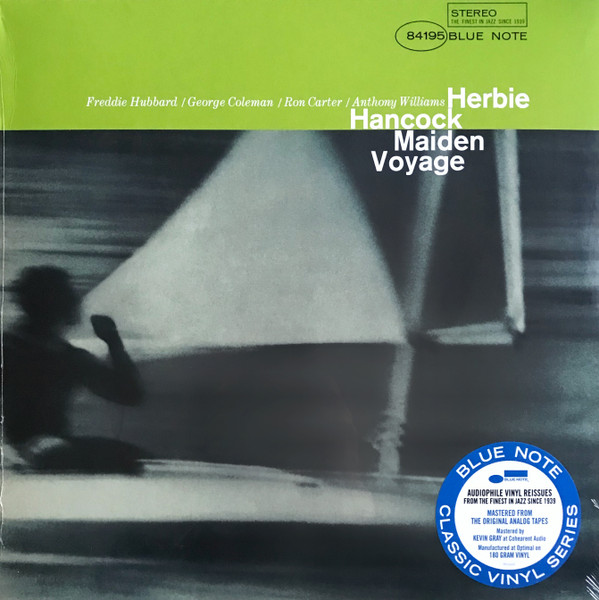
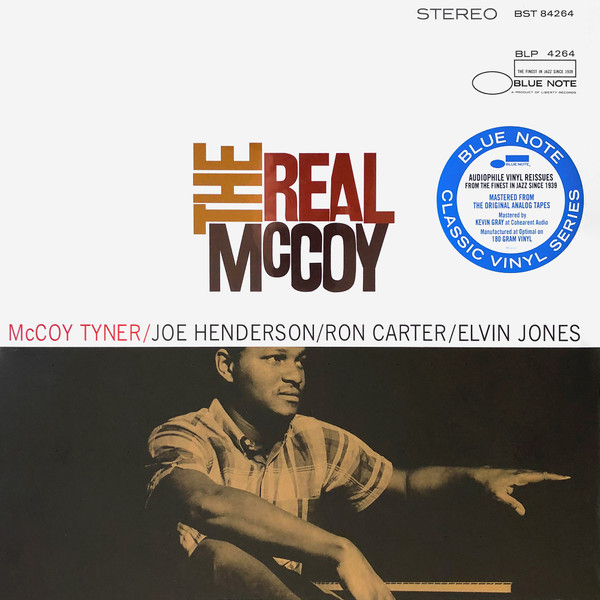
Moanin' di Art Blakey (BLP 4003, 1958) è il punto d'ingresso più diretto. Maiden Voyage di Herbie Hancock (BST 84195, 1965) è forse il disco Blue Note più accessibile: cinque composizioni ispirate all'oceano, produzione Van Gelder di straordinaria ariosità. The Sidewinder di Lee Morgan (BLP 4157, 1964) ha la particolarità di essere diventato un successo commerciale inaspettato senza perdere un grammo della propria integrità artistica.
Moanin' by Art Blakey (BLP 4003, 1958) is the most direct entry point. Maiden Voyage by Herbie Hancock (BST 84195, 1965) is perhaps the most accessible Blue Note record: five ocean-inspired compositions, Van Gelder production of extraordinary airiness. The Sidewinder by Lee Morgan (BLP 4157, 1964) became an unexpected commercial success without losing a gram of its artistic integrity.
La Tone Poet Series: quando il presente rispetta il passato
The Tone Poet Series: when the present respects the past
Nel 2019 Blue Note lancia la Tone Poet Series — ristampe audiophile prodotte da Joe Harley e masterizzate da Kevin Gray da nastri analogici originali, pressate su vinile 180g da RTI. È la risposta più seria al mercato: come si ascolta Blue Note nel 2025 senza spendere cifre da collezione per ogni singolo disco?
In 2019 Blue Note launches the Tone Poet Series — audiophile reissues produced by Joe Harley and mastered by Kevin Gray from original analogue tapes, pressed on 180g vinyl by RTI. The most serious answer to the market: how does one listen to Blue Note in 2025 without spending collector prices for every single record?
Masterizzati da Kevin Gray da nastri analogici originali. Copertine gatefold su carta pesante. Prezzi tra €40 e €60 per titolo.
Mastered by Kevin Gray from original analogue tapes. Gatefold covers on heavy stock paper. Prices between €40 and €60 per title.
Cosa rimane, 85 anni dopo
What remains, 85 years later
Blue Note non è sopravvissuta perché è stata prudente. È sopravvissuta perché ha sempre fatto una sola cosa con coerenza assoluta: mettere al centro la musica. Non il mercato, non le mode, non i formati. La musica prima di tutto — registrata meglio di chiunque altro, presentata con una cura visiva che nessun'altra etichetta jazz ha mai eguagliato.
Blue Note did not survive by being cautious. It survived because it always did one thing with absolute consistency: put the music first. Not the market, not trends, not formats. Music above all — recorded better than anyone else, presented with a visual care that no other jazz label has ever matched.
La Tone Poet Series non è economica — i prezzi si aggirano tra i 40 e i 60 euro per titolo — ma è la via d'accesso più onesta a un suono che altrimenti richiede una caccia alle prime presse su Discogs con budget tre o dieci volte superiori.
The Tone Poet Series is not cheap — prices run between €40 and €60 per title — but it is the most honest gateway to a sound that otherwise requires hunting first pressings on Discogs at budgets three to ten times higher.
«Ottantacinque anni dopo quel pomeriggio con Meade Lux Lewis, la convinzione di Alfred Lion sembra più attuale che mai. Il jazz non è musica da ballo, non è sottofondo da caffè. È arte: richiede attenzione, merita rispetto, e — messo sul piatto con il giusto pressing — restituisce qualcosa che nessun algoritmo di raccomandazione ha ancora imparato a promettere.»
«Eighty-five years after that afternoon with Meade Lux Lewis, Alfred Lion's conviction seems more current than ever. Jazz is not dance music, not café background. It is art: it requires attention, deserves respect, and — placed on the turntable with the right pressing — gives back something that no recommendation algorithm has yet learned to promise.»
— GROOVILLE