I VELVET UNDERGROUND
E LA BANANA
THE VELVET UNDERGROUND
AND THE BANANA
UNDERGROUND
& NICO
New York, 1966. Mentre San Francisco si preparava all'estate dell'amore — fiori nei capelli, pace e luce, il sogno che sarebbe durato dodici mesi prima di frantumarsi su se stesso — al 231 di East 47th Street succedeva qualcosa di completamente diverso. Andy Warhol aveva affittato un magazzino industriale e lo aveva rivestito di carta stagnola argentata. Lo aveva chiamato The Factory: non per ironia, ma perché era davvero un luogo di produzione, un posto in cui si fabbricavano immagini, serigrafie, film sperimentali, performance e, alla fine, musica. Lou Reed aveva ventiquattro anni e scriveva canzoni su droghe, sadomasochismo, transessualità e morte non per provocare, ma perché erano le cose che aveva sotto gli occhi ogni giorno. John Cale veniva da una formazione di musica classica d'avanguardia con La Monte Young e portava nel gruppo un senso del timbro e del rumore che il rock non aveva mai incontrato. Sterling Morrison e Maureen Tucker completavano una formazione che suonava come nessun'altra: feroce e delicata allo stesso tempo, colta e volutamente rozza, capace di passare da una ninna nanna in sottotono a un muro di feedback nel giro di tre tracce.
Lou Reed wrote about what he saw. Not what he imagined, not what he wanted to say — what was in front of him every day in lower Manhattan: addiction, desire, the particular loneliness of people who had deliberately placed themselves outside ordinary life. That decision — to treat the subject matter of the street and the underground as legitimate lyrical territory, without editorial distance, without redemption arc — is where this record begins and where it has never been fully matched. John Cale brought something the rock format had no framework for: he had spent years in drone minimalism with La Monte Young and understood noise and sustain as compositional tools, not as failure. Maureen Tucker hit things with mallets and no swing, standing up, indifferent to groove in the conventional sense. The combination didn't resolve into a style; it resolved into a weather system. Loud and fragile simultaneously. Informed and deliberately graceless. Nobody else sounded like this because nobody else had put these four people in a room.
La banana di Warhol
Warhol's banana
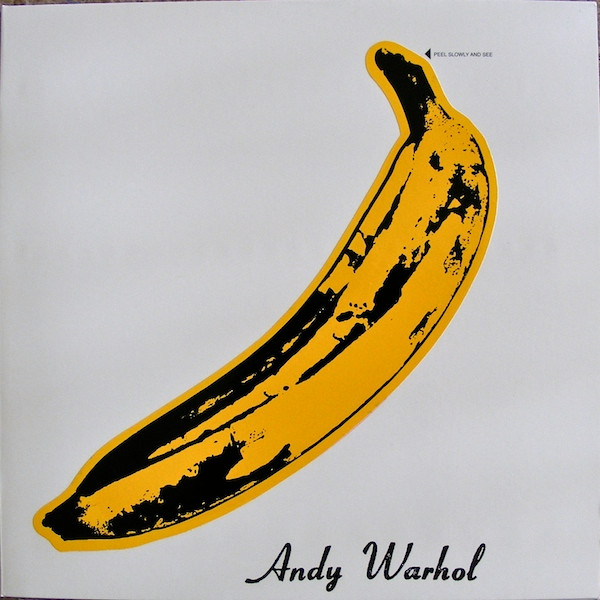
Warhol non si limitò a produrre il disco. Lo firmò come se fosse una sua opera, con il suo nome in copertina più grande di quello della band. Questa mossa — che la band accettò a metà con entusiasmo e a metà con rassegnazione — fu sia una fortuna sia un problema. Una fortuna perché portò attenzione su un disco che altrimenti non avrebbe avuto nessuna distribuzione seria. Un problema perché per anni oscurò la natura di quello che Reed, Cale e gli altri stavano costruendo autonomamente. La copertina era una banana gialla su fondo bianco. Semplice, quasi infantile. Le prime copie avevano un'etichetta adesiva con la scritta «Peel slowly and see»: sbucciandola, si scopriva una banana rosa. Era un'idea di Warhol, ovviamente — l'oggetto quotidiano trasformato in arte, il frutto come metafora dell'atto di rivelare qualcosa sotto la superficie. Le prime presse con la banana pelabile sono oggi tra i dischi più ricercati al mondo: copie Near Mint raggiungono i tremila euro su Discogs, quando si trovano.
The cover is a banana. Warhol's name is bigger than the band's. Both of those facts matter. The banana — yellow on white, peelable on early pressings to reveal a pink one beneath — is not a provocation. It is the Warhol move applied to records: the ordinary object elevated by context, the act of peeling as a literal instruction to look for what's underneath the surface. As for the name: Warhol didn't produce the record in any conventional sense. He attended sessions, offered opinions, functioned as a presence. What he provided was cultural permission and the distribution leverage that came with his reputation. In 1967 that was worth more than studio time. Reed, Cale and Tucker knew it. They resented it and accepted it simultaneously, which is the correct response to a trade-off that was both obviously necessary and obviously compromising. First pressings with the intact peelable sticker are among the most sought-after records in the world: Near Mint copies clear three thousand euros on Discogs when they appear. Find one with the sticker gone and you're looking at sixty to two hundred. Still worth it.
Il magazzino argentato di Warhol era un ecosistema: superstar della scena underground, drag queen, artisti, tossici, galleristi e giornalisti coabitavano in uno spazio in cui i confini tra arte, vita e performance non esistevano. I Velvet ci suonavano durante le Exploding Plastic Inevitable, happening multimediali con luci stroboscopiche, film proiettati sulla band, danzatori e frustate simulate sul palco. Era il contesto più lontano possibile dal rock convenzionale — ed è esattamente quello che sentite nel disco.
The silver warehouse at 231 East 47th Street ran on a principle Warhol never quite articulated but consistently applied: dissolve the line between making something and living inside it. Underground celebrities, drag queens, addicts, gallerists, film-makers and journalists occupied the same space. The Velvets performed during the Exploding Plastic Inevitable — strobe lights, films projected directly onto the band, dancers, simulated whippings on stage. It is the least rock-and-roll context in which a rock band has ever developed a vocabulary. Which is, of course, exactly why it worked.
Cosa c'era dentro il disco
What was inside the record
Il disco si apre con Sunday Morning — e questa è già la prima sorpresa. Celesta, archi morbidi, la voce di Reed quasi sussurrata: un mattino dopo qualcosa che non si descrive. La dolcezza è reale, non ironica, ma porta con sé una malinconia diffusa come nebbia. I'm Waiting for the Man è il rovescio immediato: tre accordi di piano martellati con l'urgenza di chi sta aspettando davvero qualcosa, il testo un resoconto quasi giornalistico di un acquisto di eroina a Harlem. Heroin è il centro di gravità del disco: otto minuti in cui il ritmo accelera e decelera come un respiro che cambia, la viola di Cale che porta il rumore fino alla soglia della tolleranza, Reed che canta senza giudizio di nessun tipo su cosa significhi perdersi in una sostanza. Non è un inno alla droga — è qualcosa di più preciso e più onesto: una descrizione. Venus in Furs prende Sacher-Masoch e lo trasforma in un drone ipnotico di quattro minuti che non sarebbe suonato fuori posto in un film di Bergman. All Tomorrow's Parties affida la voce a Nico — tedesca, bellissima, gelida come marmo — sopra un piano che suona come una campana funebre in lento deterioramento.
Sunday Morning is a misdirection. Celesta, gentle strings, Reed's voice barely audible — it sounds like the record is going to be gentle with you. It isn't. The sweetness is real, not ironic, but it is the sweetness of early morning after something you would rather not name, and the feeling underneath it is damage. I'm Waiting for the Man arrives next and removes all ambiguity: three piano chords hammered without finesse, the lyric a near-verbatim account of scoring heroin in Harlem, the tempo relentless. Two tracks in and the record has already done something most albums never attempt — it has established a complete moral universe, wide enough to contain beauty and squalor in the same sentence. Heroin is where it goes furthest. Eight minutes. The tempo accelerates and slows like respiration changing under a substance — Cale's viola climbs into pure noise and pulls back, Reed sings without a position, without judgment, without the implicit reassurance that this is a cautionary tale. It is a description. Venus in Furs builds a four-minute drone from Sacher-Masoch that sounds like something between a drone composition and a horror film score and is, somehow, neither. All Tomorrow's Parties gives the vocal to Nico, and her German intonation over Tucker's martial pulse creates the most precise sound of inevitable melancholy that 1967 produced.
«Tutti quelli che hanno comprato uno dei cinquecento dischi hanno poi fondato una band.»
«Everyone who bought one of those five hundred records went out and formed a band.»
— Brian Eno, spesso citata (nella versione originale: «10,000 copies sold, every buyer started a band») — Brian Eno (the version most often quoted; the number varies by source, the observation doesn't)Perché non lo comprò nessuno
Why nobody bought it
The Velvet Underground & Nico uscì il 12 marzo 1967 per Verve Records, etichetta sussidiaria di MGM. La MGM era nervosa: i testi di Reed parlavano esplicitamente di droghe e di sesso in modi che nessuna radio voleva trasmettere. La promozione fu minima. Le radio non lo passarono. Il disco entrò ed uscì dalle classifiche nel giro di settimane, senza lasciare traccia commerciale. Le stime sulle copie vendute variano — la cifra dei «500 copie» circolata per decenni è probabilmente una leggenda, ma la realtà non era molto più incoraggiante. Mentre Sgt. Pepper's Lonely Hearts Club Band dei Beatles dominava le classifiche mondiali con la sua promessa di un pop colto e allegro, il primo album dei Velvet Underground languiva in un magazzino. La band sarebbe rimasta in vita ancora qualche anno, perdendo prima Nico, poi Cale, poi Reed, fino a sciogliersi nel 1973 senza aver mai avuto un disco di successo commerciale.
Sgt. Pepper's came out three months later. The timing is instructive. While the Beatles were presenting rock as a fully formed art form — ambitious, orchestrated, self-consciously historical — the Velvet Underground's debut was failing to chart, failing to get radio play, and failing to find an audience large enough to matter commercially. MGM's Verve division released it on 12 March 1967 with minimal promotion and visible anxiety about the lyrical content. Radio programmers agreed: songs about heroin and sadomasochism were not 1967 radio. The «500 copies» figure that has circulated for decades is almost certainly wrong — the actual number was probably a few thousand — but not wrong in spirit. It sold badly. The band continued for six more years, losing Nico, then Cale, then Reed himself, and dissolved in 1973 without a single commercially successful record to its name.
Il paradosso è che proprio l'insuccesso commerciale ha contribuito alla leggenda. Chi comprò una delle poche copie nei negozi di New York e Londra nel 1967 era già, per definizione, qualcuno fuori dal mainstream — un artista, un musicista, qualcuno in cerca di qualcosa che il pop normale non forniva. Quelle poche centinaia di persone divennero moltiplicatori: lo portarono agli amici, lo parlarono, lo studiarono. La citazione di Brian Eno — «ogni compratore ha fondato una band» — è iperbolica, ma cattura una verità reale sul meccanismo di diffusione di certi dischi.
Failure, in this case, was a filter. The people who found the record in 1967 were, almost by definition, not ordinary consumers — they were artists, musicians, people already operating outside the mainstream who were actively looking for something the mainstream wasn't supplying. They did not buy it passively. They hunted it, then they pressed it on anyone they thought could hear it. The Eno observation — that every buyer started a band — is the kind of thing people say when the mathematics of influence become otherwise inexpressible. It is approximately true, which is more than most aphorisms manage.
Le band che non sarebbero esistite
The bands that would not have existed
L'influenza dei Velvet Underground è uno di quei fenomeni che diventano più evidenti man mano che ci si allontana dal centro. Il punk rock del 1976 — i Ramones, i Sex Pistols, i Wire — prende direttamente dalla loro idea di rock ridotto all'osso, privo di virtuosismo decorativo, fondato sul ritmo e sulla ripetizione piuttosto che sull'elaborazione. David Bowie studia la loro estetica e ne porta elementi nel glam rock. Television, Patti Smith, Talking Heads escono tutti da un milieu newyorkese in cui i Velvet sono riferimento ineludibile. Il post-punk degli anni Ottanta — Joy Division, Bauhaus, The Cure — prende la loro oscurità e la amplifica. Sonic Youth, Pixies, My Bloody Valentine costruiscono interi stili stilistici su tecniche di chitarra che Reed aveva usato per primo. Kurt Cobain cita spesso I'm Waiting for the Man come uno dei pezzi che lo ha convinto di poter fare musica senza saper suonare in senso convenzionale. Quando si parla di «influenza», di solito si intende una traccia riconoscibile nello stile di qualcuno. Nel caso dei Velvet Underground si intende qualcosa di più radicale: l'idea stessa che il rock potesse essere letteratura, che i testi potessero parlare di tutto, che la bruttezza e il rumore fossero strumenti estetici legittimi quanto la melodia.
Most influence works by transmission of style: you can hear the source in the sound. Velvet Underground influence works differently. What they transmitted was not a style but a permission — the permission to treat rock lyrics as literature, to treat noise as a compositional tool equal to melody, to make records that did not resolve into something comfortable. The Ramones took the speed and the urban minimalism. Bowie took the idea of the performer as constructed persona. Joy Division took the relationship between beauty and dread. Patti Smith took the confidence that a rock song could carry the weight of poetry. Sonic Youth took the alternate tunings and the controlled feedback. Kurt Cobain cited I'm Waiting for the Man specifically as the record that convinced him musical competence was optional. Each of these artists absorbed something different because what the Velvets had produced was not a template — it was a set of permissions. Take whichever ones you need.
I dischi da avere in collezione
The records to own in your collection
Il vinile: quale pressing cercare
The vinyl: which pressing to find
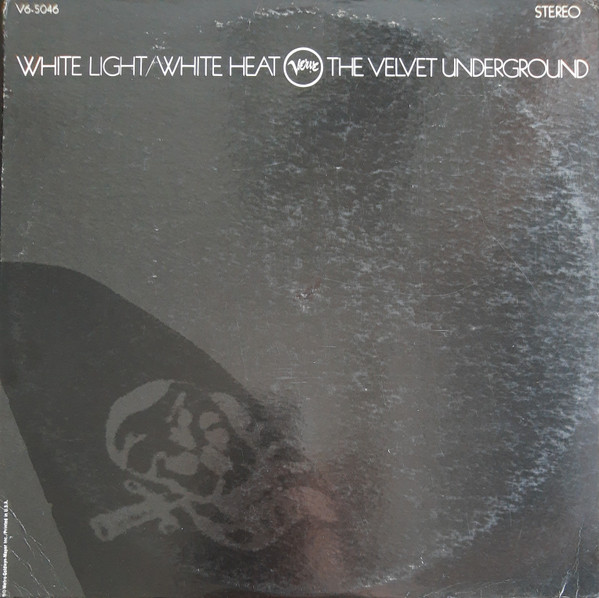
Il pressing originale Verve (V6-5008, 1967, etichetta MGM verde) è la copia da collezionismo per eccellenza. Le copie con la banana pelabile intatta sono un Sacro Graal: aspettatevi prezzi tra i 600 e i 3.000 euro a seconda delle condizioni e della rarità dello stamper. Le copie con la banana già pelata o staccata si trovano tra i 60 e i 200 euro — ancora un acquisto significativo, ma accessibile. La qualità audio dell'originale è buona, non eccezionale: la produzione di Tom Wilson era spartana per budget e per scelta, e i limiti tecnici sono parte del suono. Le ristampe MGM degli anni Settanta (diverse etichette, V6-5008 o VLP-9184) sono più facili da trovare in buone condizioni e suonano sostanzialmente equivalenti all'originale. La ristampa Sundazed su 180g del 2002 è il riferimento moderno più convincente: mastering curato, buona separazione stereo, pressing silenzioso — la scelta consigliata per l'ascolto quotidiano. La UHQR di Analogue Productions (dove disponibile) spinge ulteriormente sulla qualità audiofila, ma il prezzo elevato la rende una scelta per collezionisti seri piuttosto che per ascoltatori.
The original Verve (V6-5008, 1967, MGM green label): the collector's object. Intact peelable banana means three to five figures depending on condition and which stamper you've found — some are considerably better than others, and the community has mapped them. Banana-stripped copies land between sixty and two hundred euros. Worth buying: Tom Wilson's production was spare by both budget and choice, the low end sits back in the mix, and the original pressing communicates that sparseness honestly. Mid-Seventies MGM represses (V6-5008 later variants, VLP-9184) are sonically equivalent and easier to find clean. The 2002 Sundazed 180g is the modern reference: the mastering decision to leave Wilson's original balance intact while cleaning up the surface noise is the correct one — the record sounds like a record that was made cheaply and deliberately, not like a record that has been rehabilitated. Analogue Productions' UHQR where available pushes into audiophile territory; the price reflects that. For most purposes, the Sundazed is enough.
«C'è un paradosso al cuore della storia dei Velvet Underground: il disco che non vendette nulla è diventato, nel tempo, uno dei dischi più citati, più studiati e più imitati del rock. Non perché il mercato si sia corretto da solo — ma perché alcune idee sono più grandi del momento in cui nascono, e trovano il loro pubblico quando il pubblico è finalmente pronto a capirle. Se avete questo disco sul piatto, ricordatelo: state ascoltando il futuro che nessuno comprò nel 1967.»
«The record is fifty-eight years old. It sounds like it was made recently. That is not coincidence or accident — it is method. The method was: document what is in front of you, without asking for approval, without softening it for an audience that doesn't exist yet. In 1967, that audience didn't exist yet. It does now. It has been waiting, more or less continuously, since the first few hundred people heard this and understood that something had changed.»
— GROOVILLE