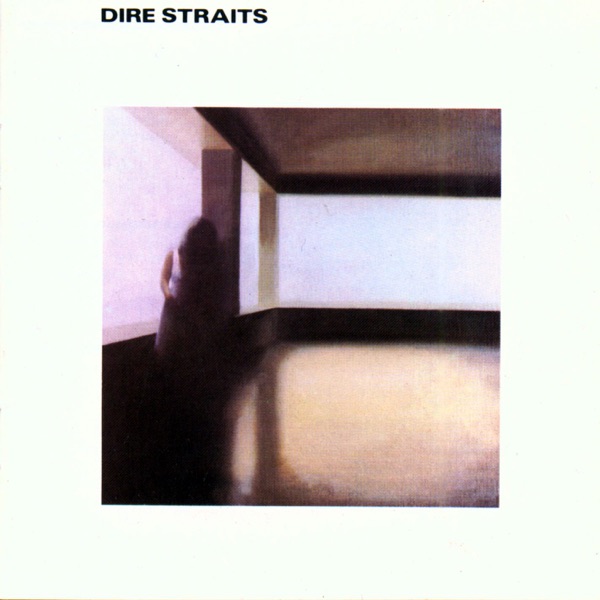
February 1978. Punk has already blown apart the foundations of British rock — the Clash have just released their debut, the Sex Pistols have already broken up — and in London's Basing Street Studios four near-unknown musicians record an album that has nothing to do with the rage of the moment. Mark Knopfler is thirty-three, plays guitar without a plectrum in the fingerpicking style of Chet Atkins, and has in his head a sound that resembles nothing being played on the radio at that moment. Punk is speed and volume. Dire Straits is slowness and space — demonstrated from the very first track, Down to the Waterline, where Knopfler's guitar enters with a riff that sounds as if one has always known it.
Muff Winwood — Steve's brother, a producer with a calibrated ear for clean sound — records the album in little more than two weeks on a minimal budget with a precise intention: to capture what the band played in London pubs without adding anything. The result is an almost physical transparency: John Illsley's bass has weight and definition, Pick Withers' drums are never over the top, David Knopfler's second guitar dialogues with his brother's without overlapping. Sultans of Swing is the track that sells the album to the world: six minutes of narrative about a jazz band playing an empty pub on a Monday night, with a closing solo that has become one of the most cited in rock history — not for speed, but for melody and control. Water of Love is the slow blues that proves how well the band knows how to use silence. In the Gallery is the longest and most ambitious track, in which Knopfler builds a story around a Bradford sculptor without losing the thread for a second.
The original UK Vertigo pressing (9102 021, green and blue spaceship label, 1978) is the absolute reference: wide dynamics, Illsley's bass with real weight, Knopfler's guitars breathing in space. Early German pressings (Vertigo 6360 162) are valued for a slightly wider soundstage. The Mobile Fidelity MFSL 2-466 double 45RPM is controversial: warm and dense mastering but excessively bright on certain systems — works well with good moving-coil cartridges, less so with budget moving magnets. For daily use, the solid 2020 standard 180g reissue is widely available.
Dire Straits is one of those albums that seems inevitable in retrospect and was in reality a quietly courageous act upon release: offering music built on subtraction in an era that rewarded excess. Knopfler doesn't shout, doesn't pose, doesn't chase effect — he tells stories with his guitar as if it were the most natural thing in the world, and the album still sounds that way, forty-seven years later.
- A1Down to the Waterline★
- A2Water of Love★
- A3Setting Me Up
- A4Six Blade Knife
- A5Southbound Again
- B1Sultans of Swing★
- B2In the Gallery★
- B3Wild West End
- B4Lions