Il 1975 è un anno di fratture. Il rock progressivo sta implodendo sotto il peso della propria ambizione, il punk rumoreggia sotterraneo, e i Led Zeppelin pubblicano un doppio album di settantasei minuti che non risponde a nessuna moda del momento. Per capire il salto, bisogna ricordare da dove arrivano: Houses of the Holy (1973, Atlantic K50014) aveva già dimostrato che la band non si accontentava di replicare la formula di Led Zeppelin IV — funk, reggae, psichedelia convivevano in uno stesso disco con una disinvoltura che i contemporanei faticavano a imitare. Physical Graffiti va oltre: non tenta di essere coerente perché la coerenza sarebbe una limitazione. Dove i contemporanei — Wish You Were Here dei Pink Floyd, Born to Run di Springsteen — scelgono la concentrazione, i Zeppelin scelgono l'espansione. Il risultato è il disco più ambizioso della loro carriera e, probabilmente, il più onesto.
Il cuore del disco pulsa in tre tracce che da sole giustificherebbero l'acquisto. Kashmir è la dimostrazione più evidente che Jimmy Page aveva capito qualcosa sulla tensione ritmica che i suoi contemporanei ignoravano: il riff orchestrale in 3/4 sovrapposto alla sezione ritmica in 4/4 genera una poliritmia ipnotica, mentre John Paul Jones trasforma gli archi in qualcosa di mediorientale senza scadere nell'esotismo da cartolina. Trampled Under Foot è funk distorto e sudato, con un organo Hammond grasso come asfalto e una chitarra wah-wah che respira come un animale. In My Time of Dying è il blues nella sua forma più viscerale: dodici minuti in cui Robert Plant urla e sussurra con la stessa urgenza, mentre Bonham costruisce uno dei groove più fisici della storia del rock. Il resto non è da meno — Ten Years Gone ha una densità di chitarre sovrapposte che prefigura certe costruzioni degli anni Ottanta, e la delicata Bron-Yr-Aur dimostra che la grandiosità non esclude la fragilità.
Il pressing originale Swan Song USA del 1975 è tecnicamente problematico: masterizzazione compressa, bassi di Bonham che perdono definizione nei picchi, rumore di fondo causato dalle inner sleeve abrasive. La prima pressa UK (SSK89400, senza logo Warner) è considerata dalla comunità audiofila superiore per equilibrio timbrico e profondità del basso. Il riferimento assoluto per chi cerca il meglio senza spendere cifre da collezionista rimane la ristampa Classic Records 200g del 2005 — fuori catalogo ma reperibile su Discogs: i tamburi di Bonham tornano ad avere la massa e l'aria che meritano. La ristampa 2015 curata da Jimmy Page è la scelta più accessibile: allarga il soundstage e migliora i dettagli nei medi, ma una certa rigidità nelle alte frequenze la penalizza rispetto alle versioni analogiche migliori.
Physical Graffiti non è il disco più perfetto dei Led Zeppelin — Led Zeppelin IV è più compatto, Houses of the Holy più elegante. Ma è il disco più vero: una band al culmine dei propri poteri che non si autocensura, che mette tutto dentro senza paura di essere contraddittoria. Settantasei minuti che non si esauriscono mai.
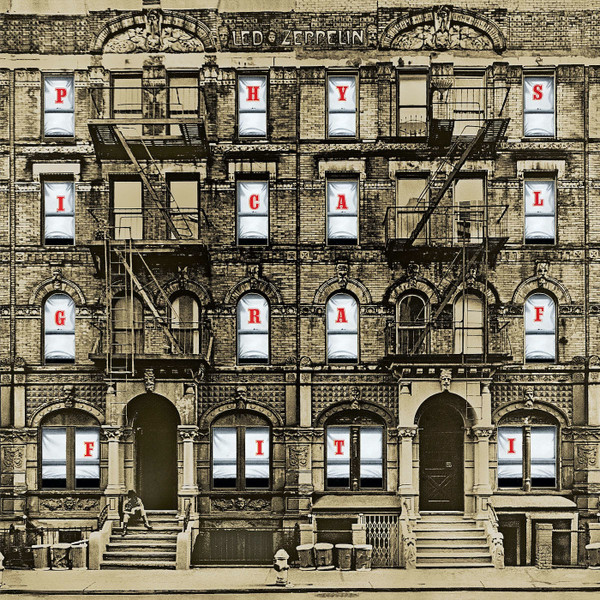
1975 is a year of fractures. Progressive rock is imploding under the weight of its own ambition, punk is rumbling underground, and Led Zeppelin release a seventy-six minute double album that answers none of the passing trends. To understand the leap, it helps to know where they came from: Houses of the Holy (1973, Atlantic K50014) had already demonstrated that the band would not settle for replicating the Led Zeppelin IV formula — funk, reggae, psychedelia coexisted in a single record with a nonchalance their contemporaries struggled to match. Physical Graffiti goes further still: it makes no attempt at coherence because coherence would be a limitation. Where their contemporaries — Pink Floyd's Wish You Were Here, Springsteen's Born to Run — chose concentration, Zeppelin chose expansion. The result is the most ambitious record of their career and, probably, the most honest.
The heart of the record pulses in three tracks that alone would justify the purchase. Kashmir is the clearest demonstration that Jimmy Page had understood something about rhythmic tension his contemporaries ignored: the orchestral riff in 3/4 layered over the rhythm section in 4/4 generates a hypnotic polyrhythm, while John Paul Jones transforms the strings into something Middle Eastern without descending into postcard exoticism. Trampled Under Foot is distorted, sweaty funk, with a Hammond organ thick as asphalt and a wah-wah guitar that breathes like an animal. In My Time of Dying is the blues in its most visceral form: twelve minutes in which Robert Plant screams and whispers with equal urgency, while Bonham builds one of the most physical grooves in rock history. The rest is no less essential — Ten Years Gone has a density of layered guitars that anticipates certain Eighties constructions, and the delicate Bron-Yr-Aur proves that grandeur does not exclude fragility.
The original 1975 Swan Song US pressing is technically problematic: compressed mastering, Bonham's bass losing definition at peak moments, background noise caused by abrasive inner sleeves. The first UK pressing (SSK89400, without Warner logo) is considered by the audiophile community superior for timbral balance and bass depth. The absolute reference for those seeking the best without collector-level spending remains the Classic Records 200g reissue from 2005 — out of print but findable on Discogs: Bonham's drums regain the mass and air they deserve. The 2015 remaster overseen by Jimmy Page is the most accessible choice: it widens the soundstage and improves mid-range detail, but a certain stiffness in the high frequencies penalises it against the best analogue versions.
Physical Graffiti is not Led Zeppelin's most perfect record — Led Zeppelin IV is more focused, Houses of the Holy more elegant. But it is their most truthful record: a band at the peak of its powers that refuses to self-censor, that puts everything in without fear of contradiction. Seventy-six minutes that never run out.
Non il più perfetto, ma il più necessario. Un doppio LP che non conosce la parola compromesso. Trovate una copia della Classic Records 200g su Discogs e capirete perché Bonham è ancora imbattibile.
Not the most perfect, but the most necessary. A double LP that does not know the word compromise. Find a copy of the Classic Records 200g on Discogs and you will understand why Bonham is still unbeatable.