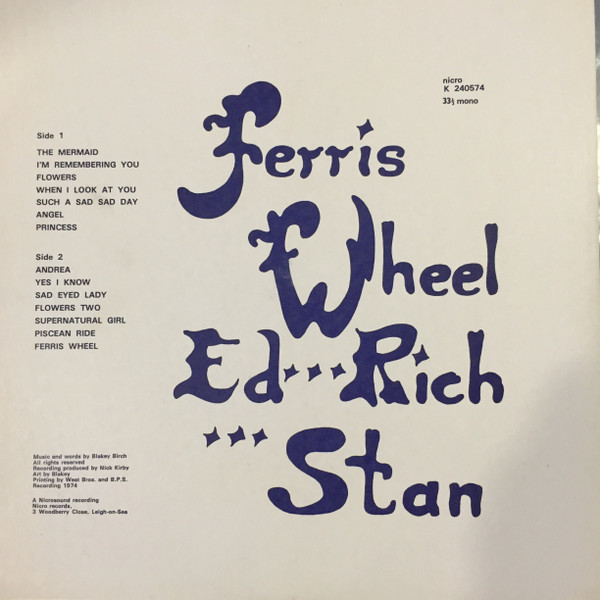
1974. Il folk psichedelico britannico ha già dato i suoi frutti maggiori — Nick Drake ha appena finito di non essere ascoltato, i Comus hanno pubblicato First Utterance tre anni prima senza che quasi nessuno se ne accorgesse, e tre ragazzi del Surrey di cui non sappiamo quasi nulla — Ed, Stan e Rich — incidono quattordici brani in mono su un'etichetta minuscola chiamata Nicro, numero di catalogo K 240574. Il pressing è privato, la tiratura è nell'ordine di poche decine di copie, la distribuzione è inesistente. Supernatural Girl finisce nel nulla — e ci resta per vent'anni, fino a quando i collezionisti più ostinati del circuito folk oscuro non cominciano a tirarselo fuori di tasca come si tira fuori un asso.
La prima cosa che si sente mettendo il disco sul piatto è il silenzio che non è silenzio: un fruscio di fondo che non è difetto ma atmosfera, come ascoltare la musica attraverso una parete. Le chitarre acustiche di Ferris Wheel hanno quella qualità specifica dei dischi registrati senza ingegnere del suono professionista — ogni nota respira più del solito, ogni errore è lasciato al suo posto non per pigrizia ma per una sorta di onestà cosmica. Flowers apre il lato A con un arpeggio che sembra costruito su tre accordi scelti per la loro fragilità: la voce entra piano, quasi di soppiatto, come se non volesse disturbare il silenzio circostante. The Mermaid e la title track Ferris Wheel sono le due vette.
Il pressing originale Nicro è oggi uno dei dischi più rari del mercato collezionistico folk mondiale. Su Discogs, il prezzo mediano supera gli 800 dollari con punte documentate oltre i 13.000. La ristampa Guerssen — prima ristampa su vinile in assoluto, con artwork originale e rimasterizzazione — è la via d'accesso onesta: mantiene la texture granulare dell'originale senza fingere di essere qualcosa che non è.
Supernatural Girl non è un disco che si consiglia a chiunque. È un disco che si trova, quasi per caso, in un momento in cui si è già attraversato abbastanza musica da capire che certi dischi non sono fatti per essere ascoltati — sono fatti per essere abitati. La lo-fi non è un difetto: è la condizione necessaria perché questa musica esista.
1974. British psychedelic folk has already yielded its major fruits — Nick Drake has just finished not being heard, Comus published First Utterance three years earlier to near-total silence, and three boys from Surrey of whom we know almost nothing — Ed, Stan and Rich — record fourteen tracks in mono on a tiny label called Nicro, catalogue number K 240574. The pressing is private, the run is in the dozens of copies, the distribution is nonexistent. Supernatural Girl disappears into nothing — and stays there for twenty years, until the most stubborn collectors of the obscure folk circuit begin pulling it from their pockets like an ace.
The first thing one hears placing this record on the turntable is the silence that is not silence: a background hiss that is not a defect but an atmosphere, like hearing music through a wall. Ferris Wheel's acoustic guitars carry that specific quality of records made without a professional sound engineer — every note breathes more than usual, every mistake left in place not from laziness but from a kind of cosmic honesty. Flowers opens Side A with an arpeggio built on three chords chosen for their fragility: the voice enters quietly, almost stealthily. The Mermaid and the title track Ferris Wheel are the two peaks.
The original Nicro pressing is today one of the rarest records in the global folk collector market. On Discogs, the median price exceeds $800 with documented peaks above $13,000. The Guerssen reissue — the first-ever vinyl reissue, with original artwork and remastering — is the honest point of access: it maintains the original's granular texture without pretending to be something it is not.
Supernatural Girl is not a record one recommends to everyone. It is a record one finds, almost by accident, at a moment when enough music has been crossed that one understands certain records are not made to be listened to — they are made to be inhabited.
Non per tutti — e questo è esattamente il punto. Un oggetto sonoro irripetibile che suona come se fosse stato registrato dentro un sogno.
Not for everyone — and that is precisely the point. An unrepeatable sonic object that sounds as if it were recorded inside a dream.