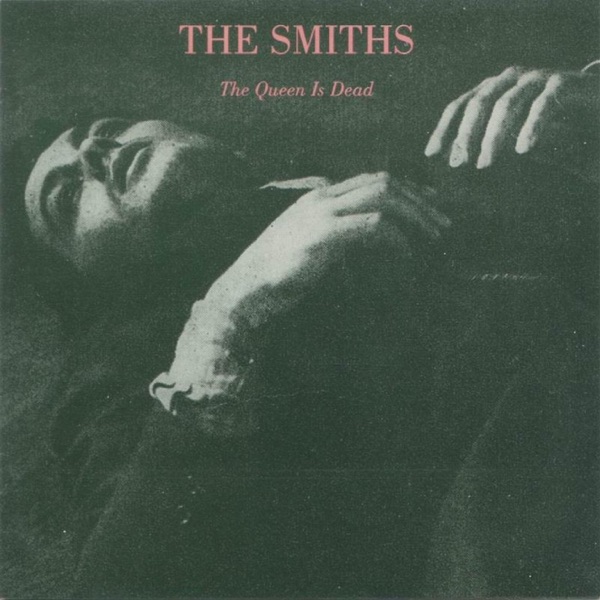
1986 is the year British music divides in two: those already touched by The Smiths and those about to be. To understand what The Queen Is Dead means in the band's arc, it helps to know where they came from. Meat Is Murder (1985, Rough Trade ROUGH 81) had already proved that Morrissey and Marr could sustain a political concept across an entire side without losing the pop lightness that set them apart — but it was also a rawer, less refined record. The Queen Is Dead is the next step: same urgency, higher formal tension. Critics have already crowned them, audiences adore them, and the fragile balance between Morrissey and Marr is about to break forever. In this context of splendour and imminent dissolution, a record is born that fears no comparison with anything contemporary — not Prince's Sign O' the Times, not U2's The Joshua Tree, two masterworks of the same era that choose grandeur where The Smiths choose surgical precision.
Marr builds a guitar sound unlike anything else in British rock history: arpeggios fast as thoughts, chords that shift before the ear expects them, a technique that simultaneously references American Fifties music and Spanish flamenco. The result is a sonic texture that on There Is a Light That Never Goes Out reaches something transcendent — Andy Rourke's bass and Mike Joyce's drums build a harmonic progression as simple as a folk song, while Morrissey transforms a mundane car ride into an ode to romantic death that forty years on has not lost a gram of its weight. Bigmouth Strikes Again is the opposite — fast, electric, almost punk in its rhythm — while Cemetery Gates proves you can quote Keats and Yeats in a pop song without sounding academic. Morrissey doesn't write literature about music: he writes music with literature.
The original UK pressing on Rough Trade (ROUGH 96, 1986) is the absolute reference — produced by Morrissey and Marr with Johnny Porter, mastered with an artisanal care that seeps from every groove. Marr's guitars carry a mid-range presence no reissue has fully replicated, and the gatefold with inner sleeve is an editorial object in its own right. The 2017 Rhino/Warners reissue is the most accessible choice and sounds genuinely good — master by Bob Ludwig from analogue tape, quiet 180g pressing, improved soundstage spatiality over the intermediate versions. The first EMI UK pressing (1986, with poster) is the version to seek for those who want the complete experience.
The Queen Is Dead is not The Smiths' best-selling record, nor their most accessible entry point. It is, however, the record where Morrissey and Marr simultaneously touch their peak — text and music supporting each other with a precision rarely seen in popular music. A record that doesn't age because it was never truly a child of its time.
- A1The Queen Is Dead★
- A2Frankly, Mr. Shankly
- A3I Know It's Over★
- A4Never Had No One Ever
- A5Cemetry Gates★
- B1Bigmouth Strikes Again★
- B2The Boy with the Thorn in His Side
- B3Vicar in a Tutu
- B4There Is a Light That Never Goes Out★
- B5Some Girls Are Bigger Than Others