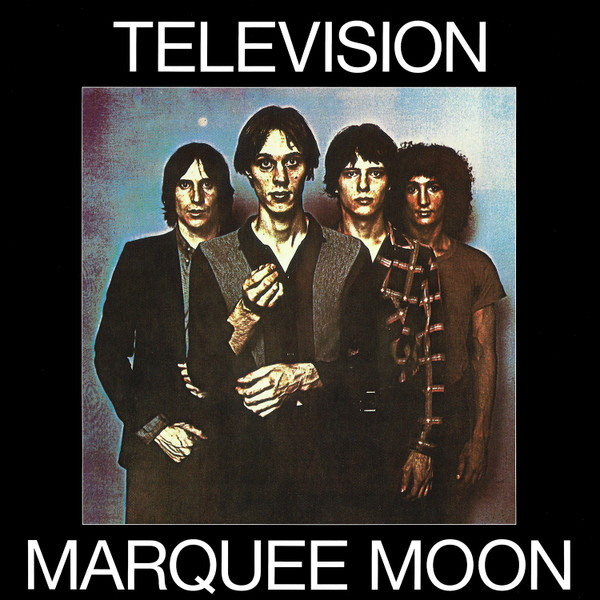
Febbraio 1977. CBGB è già un mito in costruzione, ma Television non appartiene davvero alla scena che vi si è formata intorno. I Ramones corrono a duecento all'ora, Patti Smith brucia di energia poetica, Blondie guarda alla superficie pop. Television guarda da un'altra parte — o meglio, guarda in alto. Marquee Moon arriva nello stesso anno in cui il punk sta per diventare un codice di abbigliamento, e non ha nulla in comune con quell'urgenza elementare: è un disco di sette minuti medi a traccia, costruito su intrecci di chitarra che devono più a Albert Ayler e alla musica modale che a Chuck Berry. Tom Verlaine e Richard Lloyd non si erano mai sentiti prima su disco, e quando le loro chitarre si parlano in Marquee Moon si capisce subito che stavano aspettando questo momento da tutta la vita.
Il disco si apre con See No Evil e i primi dieci secondi bastano: il riff di Verlaine è nervoso, angolare, con un'articolazione che non somiglia a nient'altro nel rock del 1977. Lloyd risponde con linee che riempiono esattamente gli spazi che Verlaine lascia vuoti, come due conversatori che non si interrompono mai perché hanno già concordato chi parla quando. Venus è il romanticismo della band nel suo momento più trasparente: melodia limpida, arrangiamento aperto, la voce di Verlaine che vola su tutto. Ma è la title track a definire il disco e l'intera carriera: dieci minuti in cui i due chitarristi costruiscono, smontano e ricostruiscono un tema che si espande come una città notturna vista dall'alto, fino al solo finale di Verlaine — uno dei più lunghi e memorabili nella storia del rock bianco americano, rapido come pensieri e preciso come bisturi.
Il pressing originale Elektra USA (7E-1098, 1977) è la versione di riferimento: taglio caldo, chitarre con la giusta presenza nei medi alti, il basso di Fred Smith solido ma mai invasivo. La stampa UK Elektra dello stesso anno è considerata da molti collezionisti leggermente più aperta nel soundstage. La ristampa Elektra/Rhino del 2003 è l'opzione più reperibile ma con una compressione moderna che toglie dinamica ai picchi. Se trovate una prima pressa americana o britannica in buone condizioni, non lasciatela andare.
Marquee Moon è uno di quei dischi che non hanno vera concorrenza nel proprio genere, perché quel genere l'hanno inventato loro. Non è post-punk — è anteriore al post-punk, ed è già oltre. Un disco che non invecchia perché non era mai stato giovane nel senso convenzionale del termine.
February 1977. CBGB is already a myth in the making, but Television never truly belonged to the scene that had formed around it. The Ramones run at two hundred miles an hour, Patti Smith burns with poetic energy, Blondie eyes the pop surface. Television looks elsewhere — or rather, looks upward. Marquee Moon arrives in the same year punk is about to become a dress code, and it shares nothing with that elemental urgency: this is a record averaging seven minutes per track, built on guitar interplay that owes more to Albert Ayler and modal music than to Chuck Berry. Tom Verlaine and Richard Lloyd had never been heard together on record before, and when their guitars speak on Marquee Moon it is immediately clear they had been waiting for this moment their entire lives.
The record opens with See No Evil and the first ten seconds say everything: Verlaine's riff is nervous, angular, with an articulation unlike anything else in 1977 rock. Lloyd responds with lines that fill precisely the spaces Verlaine leaves empty, like two speakers who never interrupt each other because they have already agreed on who talks when. Venus is the band's romanticism at its most transparent. But the title track defines both the record and the entire career: ten minutes in which the two guitarists build, dismantle and rebuild a theme that expands like a nighttime city seen from above, culminating in Verlaine's closing solo — one of the longest and most memorable in the history of American white rock.
The original US Elektra pressing (7E-1098, 1977) is the reference version: warm cut, guitars with the right presence in the upper midrange. The UK Elektra pressing from the same year is considered by many collectors slightly more open in soundstage. The 2003 Elektra/Rhino reissue is the most findable option but with modern compression that robs the peaks of dynamics. If you find a clean US or UK first pressing, do not let it go.
Marquee Moon is one of those records with no real competition within its own genre, because that genre is their invention. It is not post-punk — it precedes post-punk and is already beyond it. A record that does not age because it was never young in any conventional sense.
Non post-punk, non punk, non rock classico — semplicemente Television, e non c'è altro. Cercate la prima pressa Elektra USA o UK su Discogs e ascoltate il solo finale di Marquee Moon con le luci spente. Poi capirete.
Not post-punk, not punk, not classic rock — simply Television, and there is nothing else like it. Find the original US or UK Elektra pressing on Discogs and listen to the closing Marquee Moon solo with the lights off. Then you will understand.